"Anti-inflammatory" has become one of those wellness buzzwords that shows up on everything from smoothie recipes to supplement labels. But behind the marketing, there's genuinely important science — and a way of living that has a profound impact on how you feel, how your skin looks, how your gut functions, and how well your body ages.
Chronic low-grade inflammation is now understood to be a driver of almost every modern health condition: heart disease, type 2 diabetes, autoimmune conditions, depression, skin disorders, and accelerated ageing. The good news is that lifestyle has enormous influence over inflammatory status. What you eat, how you sleep, how you manage stress, and how much you move all feed directly into your body's inflammatory balance.
Here's what living an anti-inflammatory life actually looks like — practically, daily, without perfection.
The Food Foundation
The anti-inflammatory diet isn't a strict protocol — it's a pattern. The Mediterranean diet is the most researched anti-inflammatory eating pattern and consistently shows benefits across virtually every health marker studied. At its core:
- Eat abundantly: vegetables (especially leafy greens and colourful varieties), fruit, legumes, whole grains, extra virgin olive oil, nuts, seeds, and fatty fish
- Eat moderately: eggs, quality dairy, poultry
- Eat minimally: red meat, processed meats, refined sugar, ultra-processed foods, refined vegetable oils
The most anti-inflammatory thing you can do at any meal is add more plants. Not replace everything — just add more. More greens in your eggs. More vegetables alongside your protein. More colour on your plate. Diversity of plant foods is one of the strongest predictors of anti-inflammatory status.
"The most anti-inflammatory thing you can do at any meal is add more plants. Not replace everything — just add more."
The Specific Foods That Work Hardest
Within the broader pattern, certain foods are particularly potent:
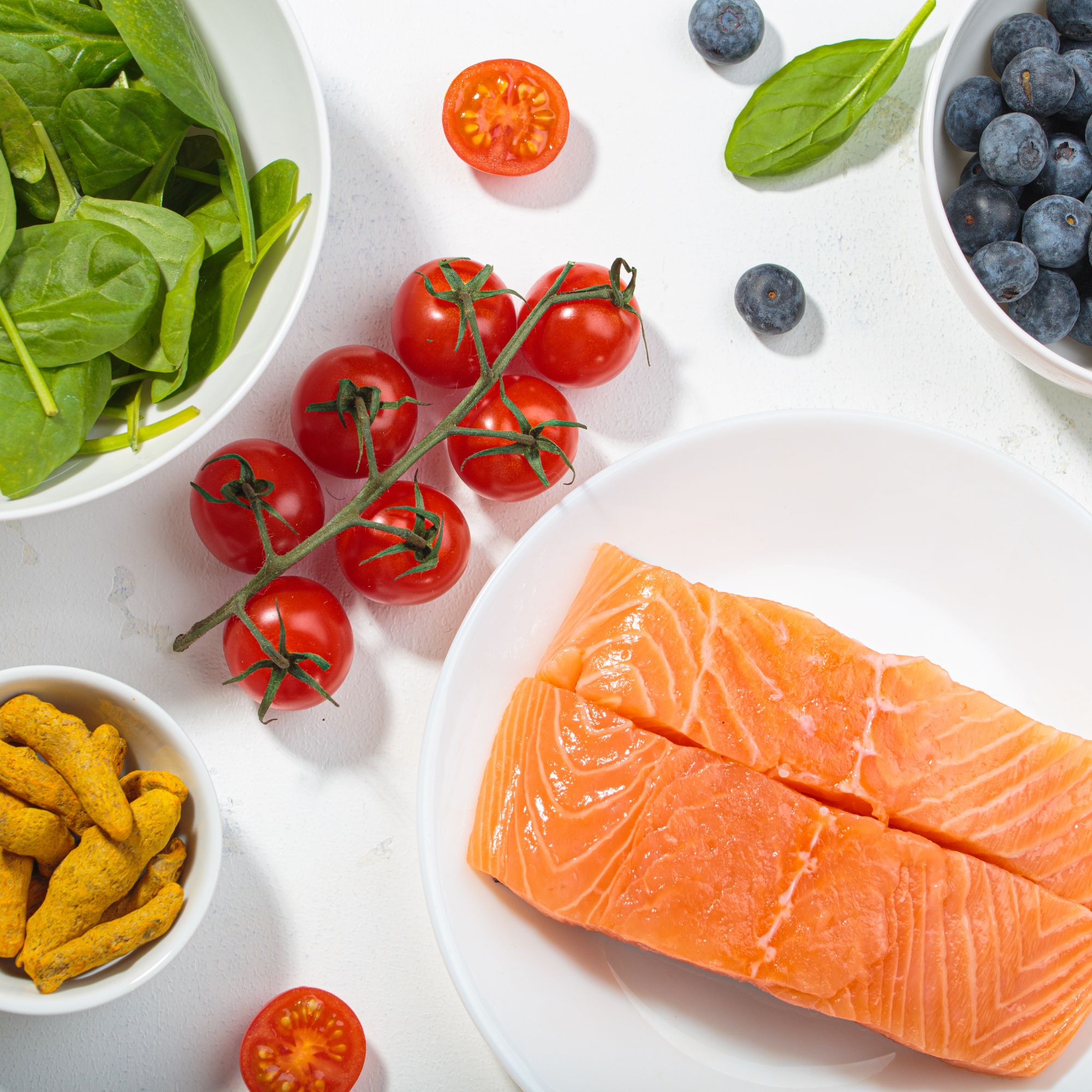
- Extra virgin olive oil — contains oleocanthal, which has been shown to inhibit the same inflammatory enzymes as ibuprofen
- Fatty fish (salmon, sardines, mackerel) — omega-3s EPA and DHA directly reduce inflammatory cytokines
- Berries — anthocyanins neutralise free radicals and reduce NF-κB, a key inflammatory pathway
- Turmeric with black pepper — curcumin is a powerful anti-inflammatory compound; piperine in black pepper increases its absorption by up to 2000%
- Dark leafy greens — packed with magnesium, which is essential for hundreds of anti-inflammatory processes
- Green tea — EGCG inhibits multiple inflammatory pathways simultaneously
- Walnuts — the only nut with significant omega-3 content, plus polyphenols that feed anti-inflammatory gut bacteria
Sleep Is Non-Negotiable
Poor sleep is one of the most reliable drivers of systemic inflammation. Even partial sleep deprivation — getting 6 hours instead of 8 — measurably raises inflammatory markers like CRP and IL-6. One bad night is recoverable. Chronic poor sleep is not — it creates a steady state of low-grade inflammation that undermines everything else you do nutritionally.
Prioritising sleep is one of the most anti-inflammatory decisions you can make. Dark, cool room. Consistent sleep and wake times. Phone out of the bedroom. These aren't revolutionary ideas, but they work.
Morning: green tea or turmeric latte · With meals: drizzle of extra virgin olive oil · Snack: handful of walnuts and berries · Evening: limit alcohol, prioritise 7–9 hours of sleep · Movement: 30 minutes of walking reduces CRP by up to 35% over time
Stress and Inflammation Are Directly Linked
Cortisol — your primary stress hormone — is actually anti-inflammatory in the short term. But when stress is chronic and cortisol is perpetually elevated, the body becomes resistant to its anti-inflammatory effects. The result is paradoxical: chronic stress leads to chronically elevated inflammation.
This means that stress management is not a luxury — it's a core component of an anti-inflammatory lifestyle. What that looks like is different for everyone. It might be a daily walk without your phone. A consistent wind-down routine. Saying no to one more commitment. Time in nature. The specific practice matters less than the consistency of it.
Movement — But Not Too Much
Regular moderate exercise is profoundly anti-inflammatory. It reduces CRP, improves insulin sensitivity, supports a diverse gut microbiome, and regulates cortisol. The key word is moderate. Overtraining and chronic high-intensity exercise without adequate recovery can actually raise inflammatory markers. Thirty minutes of walking most days, some strength training, and activities you genuinely enjoy are far more anti-inflammatory than punishing workouts you dread.
What to Reduce
Just as important as what to add is what to quietly reduce:
- Refined sugar and refined carbohydrates — directly drive inflammatory cytokine production
- Refined seed oils (sunflower, canola, soybean) — high in omega-6, which is pro-inflammatory in excess
- Ultra-processed foods — contain emulsifiers and additives that disrupt gut barrier integrity and microbiome diversity
- Excess alcohol — promotes intestinal permeability and raises inflammatory markers
An anti-inflammatory lifestyle isn't a detox or a protocol with an end date. It's a collection of daily habits that, done consistently over time, shift your body's default setting toward less inflammation. You don't need to be perfect. You need to be consistent with the things that matter most — real food, sleep, movement, and stress that doesn't run your life.