For years, I tracked everything. Every bite, every snack, every "just a taste." I knew the calories in a medium apple vs. a large one. I could tell you how many were in a tablespoon of peanut butter — and exactly how many I'd "accidentally" added when I over-poured.
I was obsessed — and stuck. Despite all that effort, my body didn't respond the way it should have. I felt deprived, anxious, and constantly at war with food.
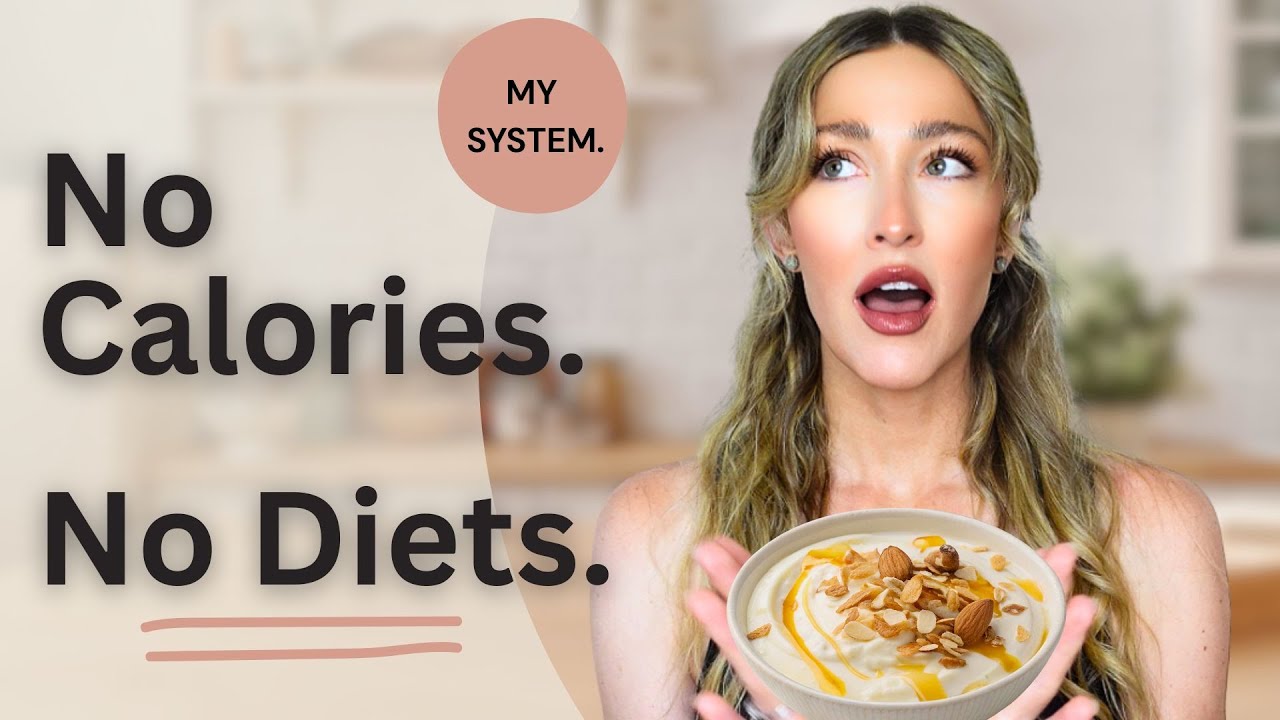
Eventually, I realised: calorie counting was keeping me mentally imprisoned and biologically confused. So I built something better. A system rooted in how the body actually works — not in numbers on a screen. And I made a video walking through the whole thing:
"Calorie counting was keeping me mentally imprisoned and biologically confused. So I built something better."
1. Intermittent Fasting — But Make It Flexible
I eat in a gentle window, usually 8am to 6pm. It gives my body space to burn stored energy and helps regulate appetite hormones. But I don't follow it rigidly. If I'm hungry earlier, I eat. I'm in a season with two toddlers and early mornings — pushing breakfast to 11am isn't realistic or kind to myself.
Instead, I honour the moment I'm in. The principle matters more than the exact hours.
Try delaying breakfast by just an hour. Let it be gentle. You don't need to start with a 16-hour fast on day one.
2. Prioritise Protein at Every Meal
Protein is my anchor. Greek yogurt bowls, eggs, cottage cheese, tuna salads, protein smoothies — I build every meal around it. Protein keeps me full, keeps blood sugar steady, and dramatically reduces cravings throughout the day.
Once I swapped oatmeal breakfasts for eggs or high-protein yogurt, my morning cravings disappeared almost completely. Think of protein as the main character of every meal. Everything else is supporting cast.
3. Feast on Fiber
Fiber changed everything for me. Most of us eat far too little of it — and when I started upping mine, I felt the difference immediately. I add inulin fiber to my coffee, load my meals with vegetables, and snack on crunchy, hydrating foods like cucumber and bell pepper.
- Expands in your stomach → real, lasting fullness
- Balances blood sugar → fewer cravings and energy crashes
- Feeds gut bacteria → better hunger signaling over time
4. Portion Awareness — Without Restriction
I used to think portion control meant eating like a bird. Now I see it as eating with intention. A few things that make a real difference without feeling like deprivation:
- Smaller plates and bowls — it works, even when you know it works
- Half a plate of vegetables at most meals
- Snacks go in a bowl, never straight from the bag
- Stop at 80% full, not stuffed — fullness is a spectrum
Satisfaction over stuffed. Pause and check in before autopilot takes over.
This system works because it's based on how the body actually functions. No micromanaging. No obsessing. Just simple rhythms that honour your biology and give your mind a genuine break from food noise.
You don't need more discipline. You need a system that respects you.