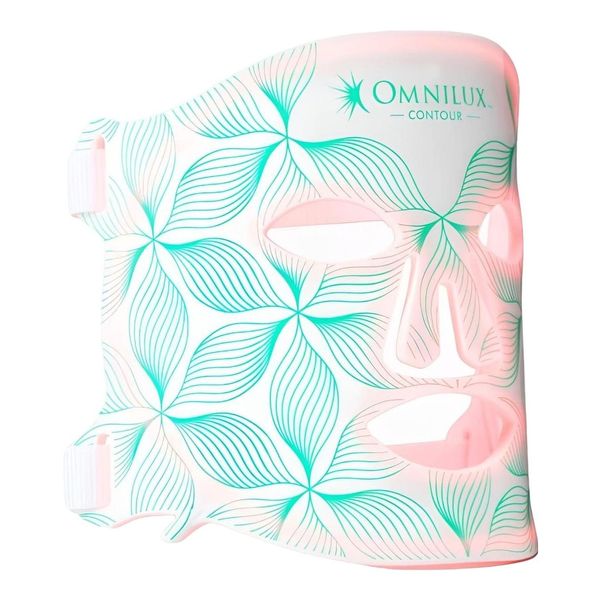
There are very few skincare tools that I would call genuinely transformative. Most devices are gimmicks — things that feel luxurious without producing measurable biological change. Red light therapy is the exception. It has more peer-reviewed clinical evidence behind it than almost any other non-invasive skin treatment, and the Omnilux Contour is the device that brings that clinical-grade wavelength delivery to at-home use.
I've been using mine consistently for over a year. In that time I've watched it reduce inflammation after microneedling sessions, improve my skin's overall density and tone, and — most noticeably — accelerate my skin's healing response. But the results only fully clicked when I understood both how it works biologically and what the body needs nutritionally to make photobiomodulation function optimally. Here's everything.
What Is Red Light Therapy — and What Does It Actually Do?
Red light therapy, or photobiomodulation (PBM), works by delivering specific wavelengths of light — primarily 630nm (red) and 830nm (near-infrared) — deep into the skin's cellular structures. These wavelengths are absorbed by a molecule inside the mitochondria called cytochrome c oxidase, which is part of the electron transport chain responsible for producing cellular energy (ATP).
When cytochrome c oxidase absorbs red and near-infrared light, it triggers a cascade of cellular activity: ATP production increases, reactive oxygen species are temporarily elevated in a way that signals cellular repair, and key signalling molecules like nitric oxide are released. The downstream effects include:
- Increased fibroblast activity — the cells responsible for producing collagen and elastin become more active
- Reduced inflammation — pro-inflammatory cytokines decrease; anti-inflammatory pathways are upregulated
- Accelerated wound healing — cell migration and tissue remodelling speed up significantly
- Improved circulation — nitric oxide release dilates blood vessels, improving nutrient delivery to skin tissue
- Reduced melanin production — at the correct wavelengths, hyperpigmentation can fade over time
"Red light therapy has more peer-reviewed evidence behind it than almost any other non-invasive skin treatment. The science is not new — it's been used clinically since the 1990s."
Why the Omnilux — and Not a Cheaper LED Mask
The LED mask market is flooded with devices that claim to deliver red light therapy. Most of them don't. The critical variables are wavelength precision and irradiance (power output) — and most consumer devices fail on both counts.
The Omnilux Contour uses medical-grade LEDs calibrated to deliver exactly 633nm (red) and 830nm (near-infrared) — the wavelengths with the most robust clinical evidence. Its irradiance is high enough to reach the dermis where fibroblasts live; lower-powered devices only affect the epidermis, which is where many cheap masks stop. Omnilux technology was originally developed for clinical and surgical wound healing — it's not a beauty gadget that borrowed LED technology. It's a medical device that was adapted for consumer use.
The flexible silicone design also ensures full facial contact, which matters because LEDs must be close to the skin's surface to deliver an effective dose. A rigid mask that doesn't conform to your face is losing a significant portion of its potential output to air gap.
A 2014 randomised controlled trial published in the Journal of Photochemistry and Photobiology found that 633nm + 830nm LED treatment significantly improved skin roughness, fine lines, and overall skin tone compared to placebo, with no adverse effects. This is the wavelength combination the Omnilux uses.
My Omnilux Protocol
Frequency and Duration
Omnilux recommends 10 minutes per session, 3–5 times per week for the first 4 weeks, then 2–3 times per week as maintenance. I use mine nightly, primarily because it pairs so well with my evening wind-down and requires no active effort — I lie down, put it on, and read for 10 minutes.
What to Apply Beforehand
Clean skin is best — red light penetrates more effectively without a barrier of product. If I've been wearing SPF or makeup, I double cleanse first. After the session, I apply my most active serums: hyaluronic acid, vitamin C, or a peptide serum. The increased cellular activity post-session means absorption and utilisation of topicals is enhanced.
Combining With Microneedling
Red light therapy after microneedling is one of my favourite combinations. Microneedling creates controlled injury; red light accelerates the healing response and reduces the inflammatory period. I use the Omnilux immediately after needling and for the 3 nights following. This combination visibly reduces redness duration and appears to accelerate the collagen remodelling phase.
What to Expect Week by Week
Week 1–2: Subtle improvements in skin tone and a reduction in redness or inflammation. Skin may look a little brighter. Most people don't notice dramatic change yet.
Week 3–4: Skin texture begins to smooth. Fine lines around the eyes and forehead are often the first area of visible improvement. Breakouts, if present, typically reduce in frequency.
Month 2–3: The collagen remodelling that began in week one is now visible — skin appears firmer, pores look tighter, and overall density has improved. This is when people typically start noticing the results without needing to look for them.
The Nutrition That Makes Red Light Therapy More Effective
This is where most red light therapy content stops — at the device. But photobiomodulation stimulates cellular activity. What that activity produces is entirely dependent on what the cell has available to work with.
The fibroblast activity triggered by red light will produce collagen — if the building blocks are present. It will accelerate healing — if the anti-inflammatory nutrients are in supply. It will improve circulation — if the vascular system is supported by the right dietary inputs. Without the nutritional foundation, you're essentially pressing a gas pedal in a car with no fuel.
The key nutrients for maximising red light therapy outcomes:
- Vitamin C — essential cofactor for collagen synthesis; without it, the increased fibroblast activity triggered by red light cannot produce stable collagen
- Collagen peptides or glycine-rich foods — provide the amino acid substrate fibroblasts need to actually build collagen
- Astaxanthin — a potent antioxidant found in wild salmon and krill that reduces UV-induced skin damage and supports the skin's response to light-based therapies
- Omega-3 fatty acids — support the resolution of inflammation and maintain cell membrane integrity, improving the efficiency of cellular energy production
- Coenzyme Q10 — works synergistically with the mitochondrial pathway that red light targets; found in organ meats, beef, sardines, and spinach
"Photobiomodulation stimulates the fibroblasts. What they build depends entirely on what you've given them to work with. Nutrition is the raw material."
Red light therapy is not a magic wand — it's a tool that amplifies your skin's own capacity to repair, rebuild, and renew. The Omnilux delivers that stimulus reliably and safely. But the results you get from it are a direct reflection of what you're doing nutritionally to support the cellular activity it triggers.
If you want the complete inside-out protocol — the foods, combinations, and meal plan designed specifically to support skin repair and collagen production — it's all in the Eat Your Skincare bundle.